The Imperium’s shadow tightens as new factions slip through the rift, reshaping the battlefield with iron-willed zeal and forbidden tech.
While previous Warhammer RTS outings only ever got up to nine distinct playable factions in Warhammer 40,000 Dawn of War Soulstorm, Creative Assembly’s fantasy equivalent, Total War Warhammer 3 is sitting at a mighty 24, each with their own distinct sub-factions. Total War Warhammer 40k has the opportunity to bring all manner of playable factions, each with its own unique playstyle to offer.
The forces of Chaos
In the storm of micro-conquests and shifting allegiances, the Chaos forces promise a relentless, disruptive edge-turbulent magic clashing with brute, unyielding warfare as they surge into the fray.
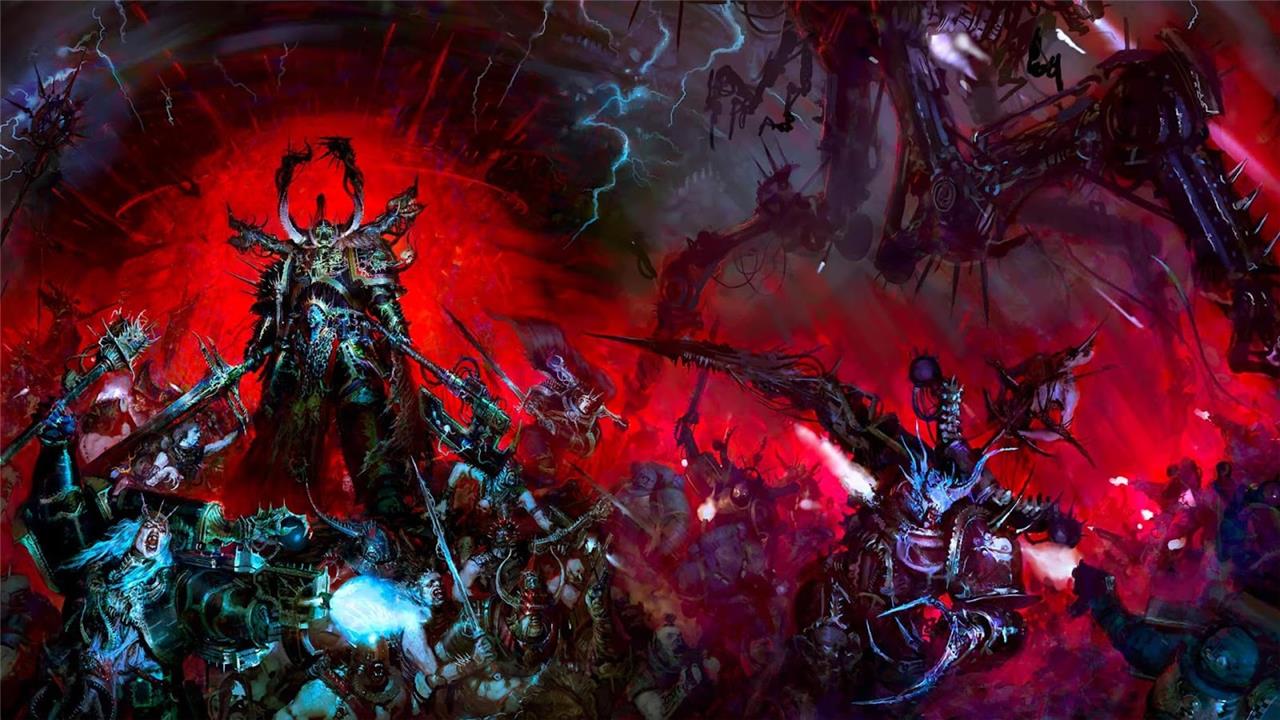
It’s baffling that Total War Warhammer 40k isn’t going to include any of the various forces of Chaos. The first Dawn of War had the Chaos Space Marines as one of the starting factions. The eldritch deity-worshipping fallen supersoliders made for excellent primary antagonists.
Creative Assembly has already said that Chaos will be “part of our plans at some point,” but has also stated that there will be no pre-order DLC. This means that the forces of Chaos are unlikely to get thrown in at the last minute like the Chaos Warriors in Total War Warhammer.
What the forces of Chaos bring is an almost unparalleled variety. Amongst those serving Chaos, you’ll find Corrupted Space Marines, horrifying daemons, and vile cultists, each with their own flavor depending on which foul god they pledge their allegiance to. Chaos is a no-brainer, and their playable absence on release will likely sting.
Drukhari
The Drukhari thrive on speed, cruelty, and precision. Their armies strike like a scalpel, hitting weak points before fading back into the webway to avoid retaliation. On the battlefield, they rely on fast skimmers, grotesque creations born of pain, and elite warriors trained for sadistic efficiency. A Drukhari campaign in Total War Warhammer 40k would likely focus on rapid raids, slave-taking, and maintaining control through fear rather than loyalty.
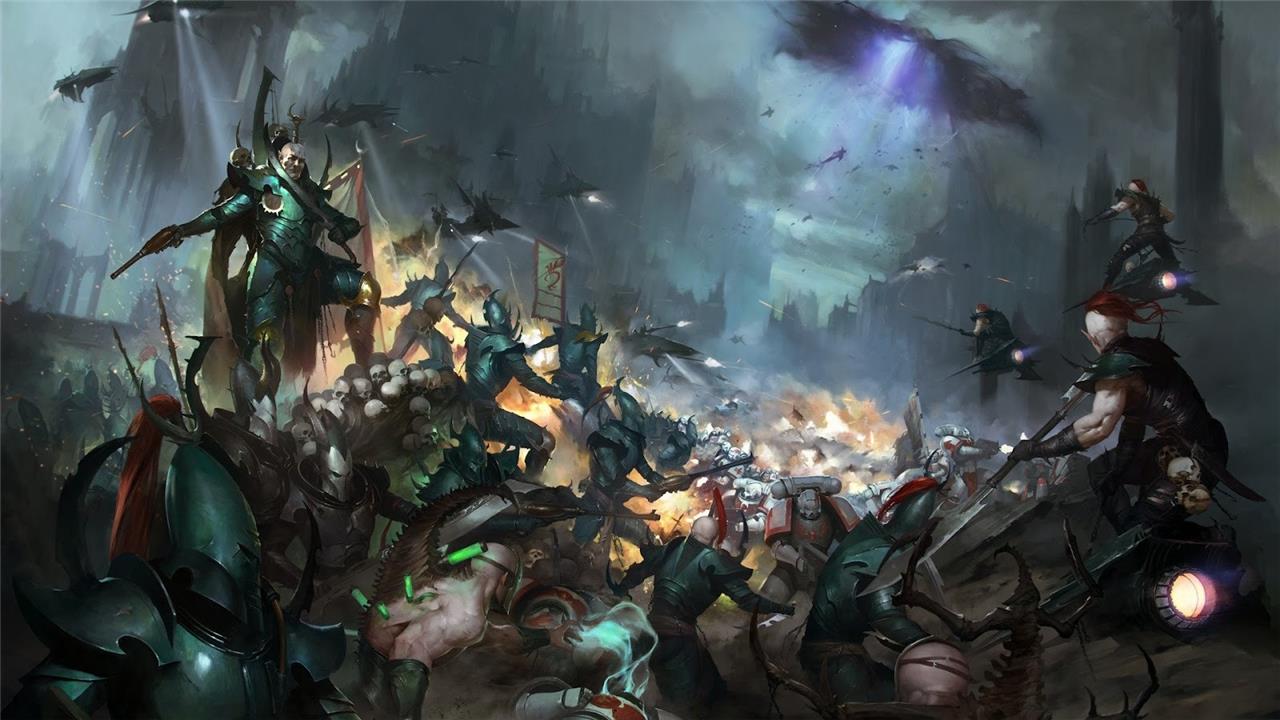
Not to get too into the weeds of Warhammer 40k lore, but the starting faction of the Aeldari is only one side of the space elves. Their dark and sadistic cousins, the Drukhari, or Dark Eldar, are waiting in the shadows to strike.
The Drukhari are pirates, suddenly appearing across the galaxy, taking everything and everyone of value, and then disappearing again. On the campaign map, they’d likely benefit from the Webway, the Eldar’s own teleportation network, to safely harass enemies rather than relying on straight conquering.
In Total Wars combat, they’d be hit-and-run glass cannons, dealing devastating damage, and then breaking if they find themselves in combat for too long.
Their anti-gravity skimmers are ready to harass enemies and then fall back to press it all over again. No doubt they’ll require far too much micromanagement, but experienced tacticians will get a lot out of them.
T’au Empire
The T’au Empire would introduce a very different flavor to Total War: Warhammer 40k. Their focus on advanced ranged combat, coordinated battlesuits, and drones contrasts sharply with the brutal melee style of most factions. On the campaign map, their “Greater Good” philosophy could translate into diplomatic mechanics that encourage alliances or peaceful subjugation instead of pure conquest. Expect sleek armor, disciplined armies, and devastating high-tech firepower that rewards precision over brawling.
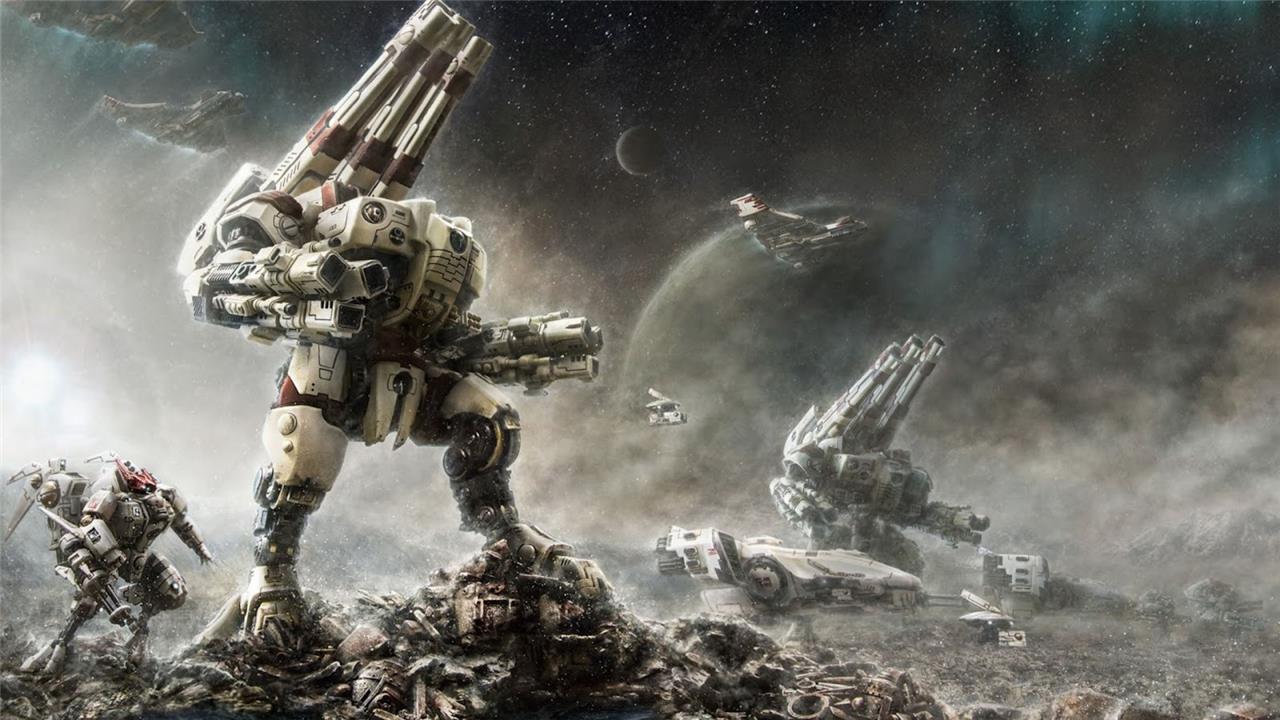
The T’au Empire is almost like a spiritual opposite to the Imperium of Man. It’s a breath of fresh air in the grimdark future, galactic empire rallying around the collectivist principle of the ‘Greater Good’.
In addition to auxiliaries drawn from all over its dominion, the T’au embrace a highly structured caste system, while bringing anime-style battlesuits to the battlefield.
The T’au have so many things going on with their armies that they might lack a sense of cohesion, as they did back in Dawn of War Dark Crusade. However, their focus on the extreme range more than makes up for it.
Their caste system and ability to incorporate other xenos into their fold could bring interesting campaign mechanics. Want a squad of insectoid killers to fight alongside some mutant cannibals? The T’au can deliver.
In addition, given its love of commercialism and cultural hegemony, the T’au Empire represents a chance for a stronger diplomatic game in Total War Warhammer 40k, while fielding strangely diverse armies.
Necrons
The Necrons march to war as ancient mechanical legions risen from tomb worlds, bringing cold precision and overwhelming firepower. Their armies rely on reanimation protocols that make them almost impossible to kill, as fallen warriors repair themselves mid-battle. On the campaign map, they could dominate through technological superiority, awakening hidden tomb complexes that expand their power. Against such relentless foes, only coordinated assaults and sustained pressure might prevent the galaxy from falling under their metallic rule once more.
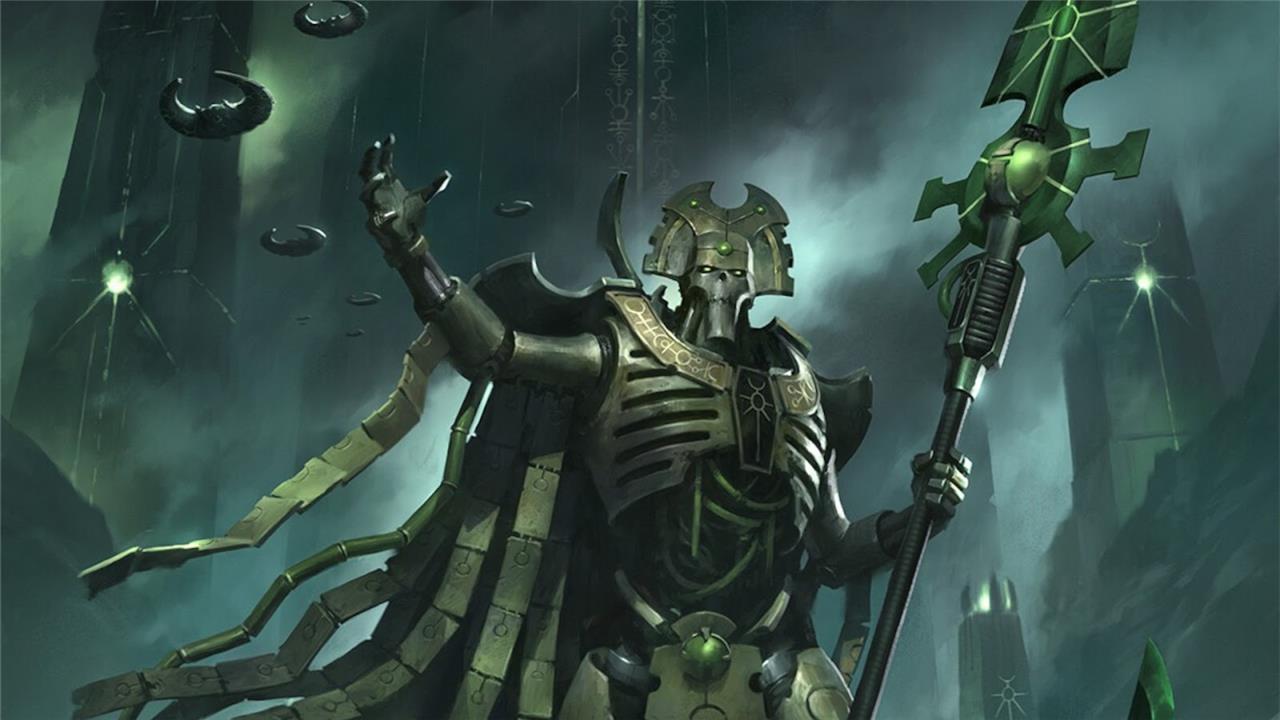
The Necrons are technological undead; they’re ancient, slow, and near unstoppable once they get going. Their particular brand of sci-fi necromantic ancient Egypt makes them a visually distinctive fan-favorite. They’re even one of the starting factions in Dawn of War 4.
Every part of the galaxy appears to have some kind of dormant tomb world of one Necron dynasty or another, ready to shake the dust off and get to conquering. On the campaign map, this could lead to Necrons being able to discover the power of other dynasties, much like their fantasy cousins, the Tomb Kings, in Total War Warhammer 2.
In battle, Necrons are a slow but inevitable force of metallic skeletons, part zombie horde and part terminator. Their numbers and relentless force would make them a formidable army to wield, and no doubt will incorporate some form of techno-necromancy.
Adeptus Mechanicus
The Adeptus Mechanicus clank into the fray as technomystic pragmatists, turning ancient relics into war machines with sacred fervor. They marshal a disciplined, resourceful toolkit-relic harvesters, skitarii guardians, and templated rituals-that favors calculated optimization and brutal efficiency. In battle, their Metalcradle units grind through foes, while covert rites and cybernetic augmentations tilt the odds in favor of relentless, mechanized superiority.
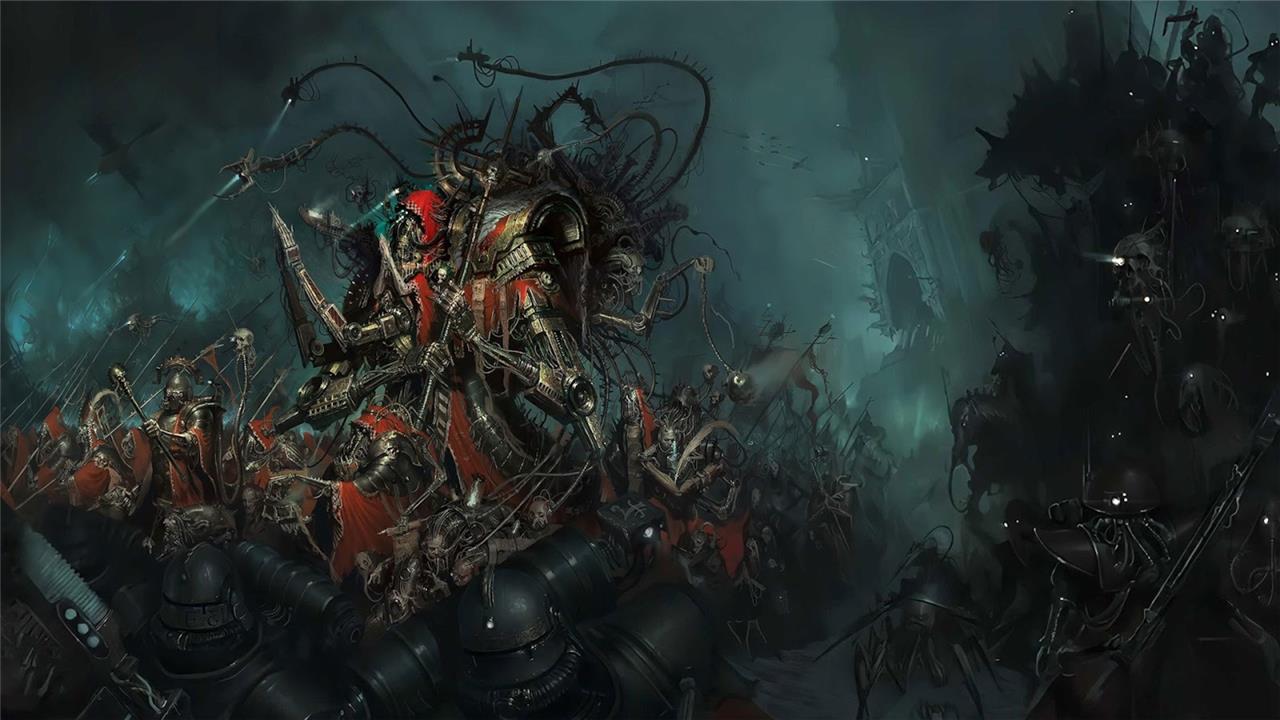
Another faction getting some love from Dawn of War 4, the Adeptus Mechanicus are the (partially) human techno-cultists of Mars. Literally full of advanced technology, the Adeptus Mechanicus are a novel mixture of specialists and war machines.
Magi, the most powerful of the Mechanicus’ tech-priests, have access to ancient technological secrets, giving them a lot of mechanical potential (pun intended). In battle, they could act as unique spellcasters, well-suited to disrupting enemy technology and their own vehicles and war machines.
The Adeptus Mechanicus is concerned with the unearthing of old technology. This is fertile ground for interesting campaign objectives, which could have the faction working to uncover mysteries and use the fruits of the quest for knowledge to augment its forces. Their tech-priests would certainly have more interesting research options than other parts of humanity.
If Total War Warhammer 40k’s customisation is up to scratch, we might even get Chaos-aligned Hereteks. Then we can start throwing daemons into horrifying machines to create truly hellish battlefields.
Tyranids and Genestealers
Tyranids and Genestealers bring a brutal, hive-mind threat to the battlefield, where relentless swarms overwhelm defenses and biological warfare reshapes tactics. Expect swift raiders, adaptive monsters, and psychic-inspired support that pressure positional play, forcing players to balance aggression with careful targeting and terrain control.
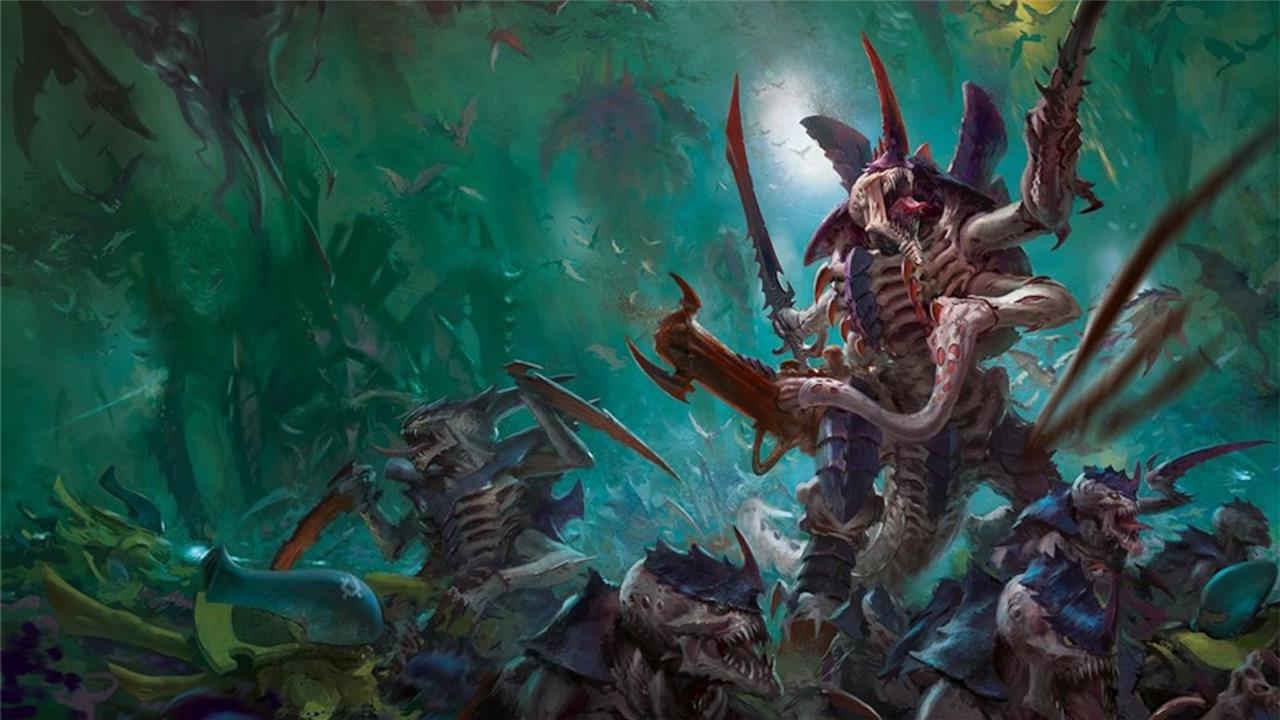
If you’ve had a chance to play Warhammer 40k Space Marine 2, then you’ll already understand the appeal of the Tyranids. Somewhere between a Xenomorph and Vermintide’s Skaven, these ravenous aliens seek to consume all worlds in front of them, then move on to their next conquest.
Mixed in amongst these ravenous aliens are plenty of hulking units, as well as the opportunity to bring in some more interesting specialists in the Genestealers. The Genestealer cultists are former humans turned Tyranid-aligned spies that could act as stealthier forces on the battlefield, helping to flank enemies and sow discord.
On Total War Warhammer 40k’s campaign map, the Tyranids could be a gift of unique mechanics. A grand campaign based on consuming planets and generating biomass could create a novel experience for players where expansion isn’t just a goal, but necessary for survival.
Sisters of Battle
Armed with roaring bolters and unwavering zeal, the Sisters of Battle bring holy retribution to any who challenge the Emperor’s will. Their armies mix infantry faith and flaming firepower, marching behind soaring hymns and banners of purity. Expect high morale, strong infantry lines, and devastating short-range weapons backed by acts of faith that turn desperate battles into glorious victories.
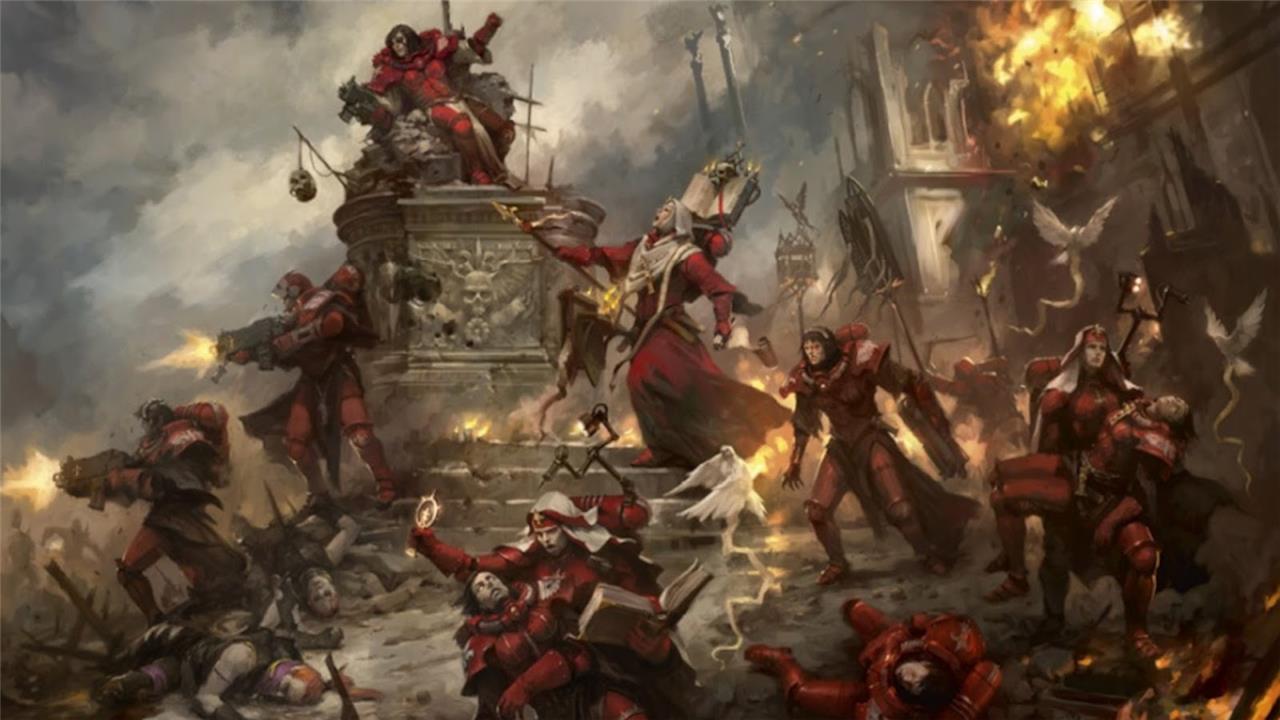
The Sisters of Battle are true Zealots of the God-Emperor and the Imperial Cult, fanatically devoted to the totalitarian religion of the Imperium. The Sisters of the Adepta Sororitas aren’t as genetically augmented as the Space Marines, but they’re armed to the teeth and singularly devoted to the cause.
In combat, this will likely manifest as an army that just won’t break. Leadership is a big component of Total War, and various buffs from religious iconography and abilities would keep the Sisters of Battle on the field against terrible odds, while maintaining the firepower expected of an effective crusade.
Those who have played Warhammer 40k Rogue Trader will know the sheer firepower of Argenta, a beloved (and hard as nails) companion from Owlcat Games’ excellent RPG. Imagine an army of Argentas. We rest our case.
Custodians
Custodians stand as the Emperor’s personal guard, towering warriors clad in golden auramite armor who wield guardian spears with unmatched precision. Born from genetic stock superior to even the Space Marines, these ten-thousand-strong elite defend the Imperial Palace on Terra against all threats. Their discipline and loyalty remain absolute, making them ideal for Total War: Warhammer 40k as a faction of heavy shock infantry, auramite-clad phalanxes, and teleporting dreadnoughts that crush foes in close combat while shrugging off firepower. Picture them holding the line like unbreakable statues amid bolter storms, a perfect DLC addition for Imperial loyalists craving perfection in golden form.
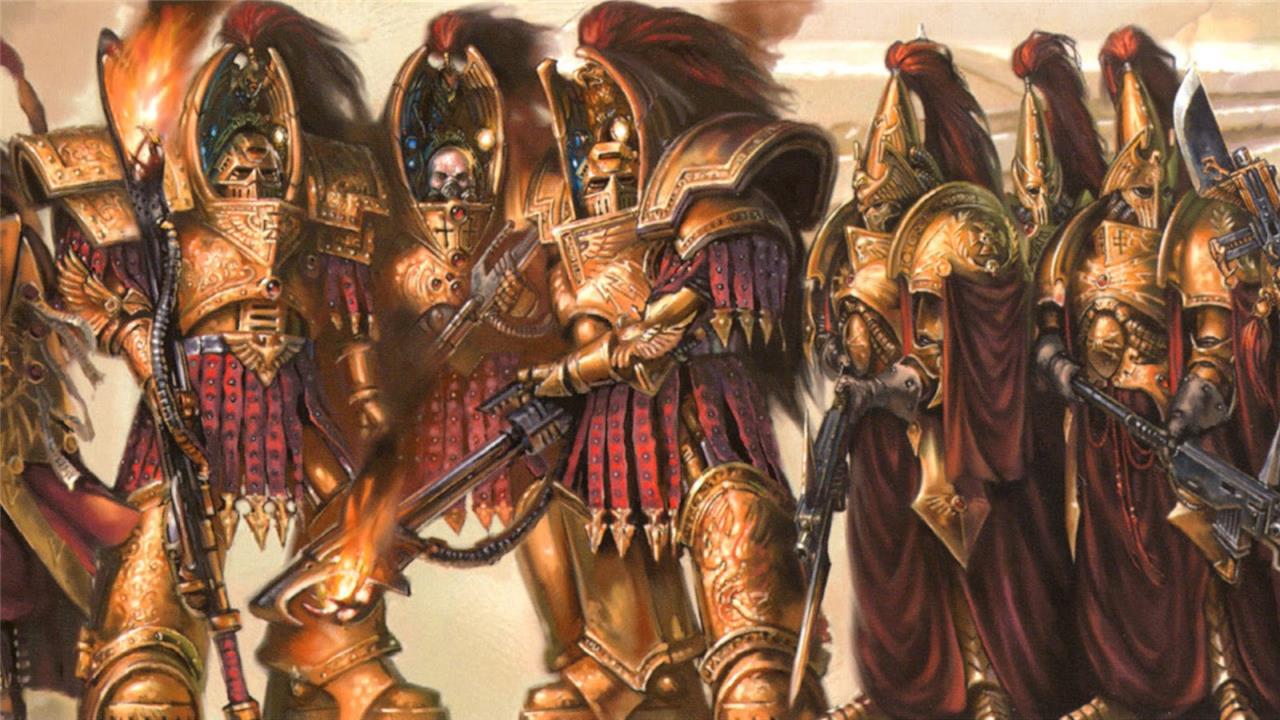
The Custodians are members of the Adeptus Custodes, bodyguards of the Emperor of Mankind, the cream of the crop of humanity, and celebrity Henry Cavill’s favourite army. Augmented enough to make Space Marines look like weeds, any one of the Custodians is a battalion unto themselves, highly trained and devastating on the battlefield.
Commanding the golden forces of the Custodes would be like playing an army of heroes. Small numbers of units with remarkable stats, but limited presence on the battlefield, and likely few actual armies across the campaign. Dawn of War’s objective-based gameplay could never allow for such a low unit count, but Total War represents quite an opportunity.
Considering that maintaining an actual planetary presence would be difficult with an army of only 30 people, it’s possible that they would be a horde faction, roaming about the map and dispensing golden violence.
Leagues of Votaan
The Leagues of Votaan bring the stoic resilience and advanced engineering of the Kin to the battlefield. Their armies rely on durable infantry, weapons powered by ancient technology, and powerful exo-armor suits that can match the might of any opposing force. In Total War Warhammer 40k, they’d likely blend traditional heavy formations with cutting-edge firepower, rewarding players who favor precision, defense, and methodical advancement over reckless aggression.
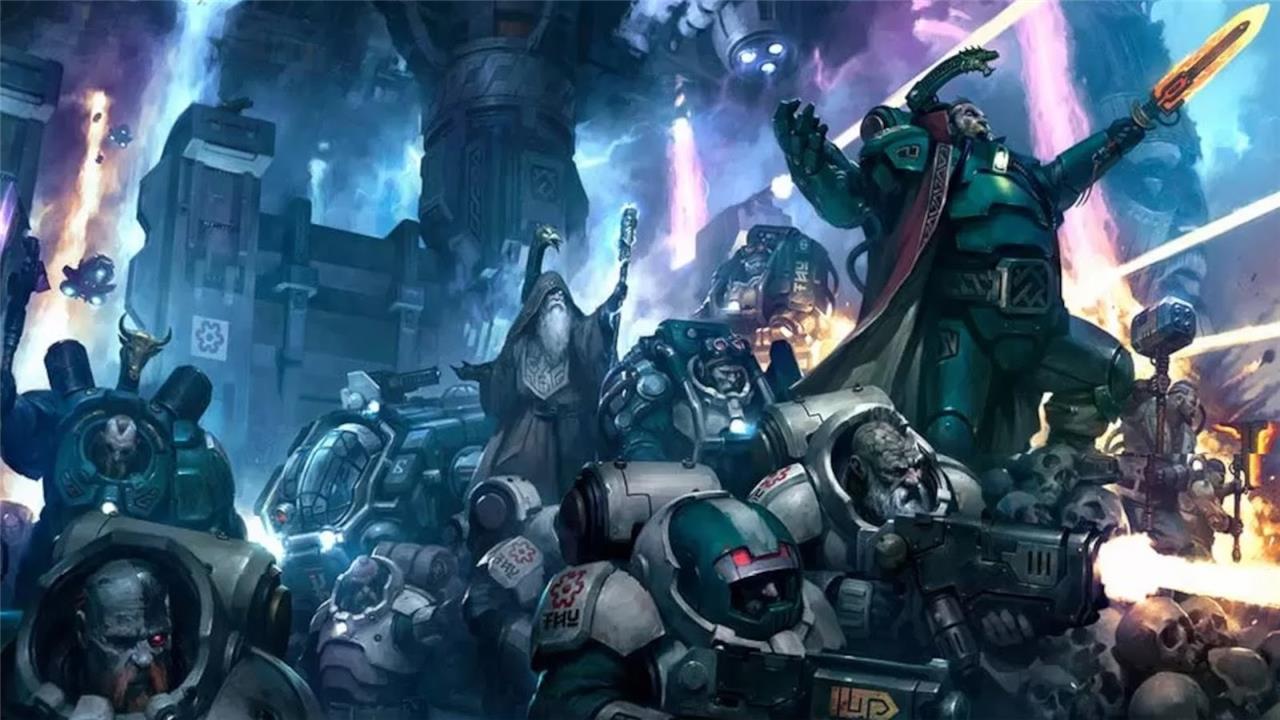
The Leagues of Votaan are space dwarves, alright. They’re an independent league of Deep Rock Galactic dwarves, with their own unique technologies and a strong sense of community.
While they mostly stick to the galactic core in the lore, they exist in different clans in Dwarf Fortresses around self-aware machine intelligences called Votaan. This alone gives more than enough unique aspects to fuel their campaign, especially around the other technologically devoted factions like Necrons and Mechanicus.
In combat, they’d be exactly what you’d expect. Slow-moving, short range, and tanky, but with the firepower to back it up. The Votaan are the least likely of any major faction to actually show up with basically no presence in any other 40k game, but they’re the ones I want to play the most.
The Inquisition
A shadowy power network within the Imperium, the Inquisition thrives on secrecy, fear, and absolute authority. Its agents root out heresy, corruption, and xenos influence with ruthless precision, each Inquisitor commanding their own retinue of loyal specialists and warped technology. On the battlefield, they bring elite strike teams, psychic might, and moral terror, turning allies into instruments of purgation or sacrificial pawns. Few factions command such respect-or dread-as those who answer directly to the Emperor’s will.
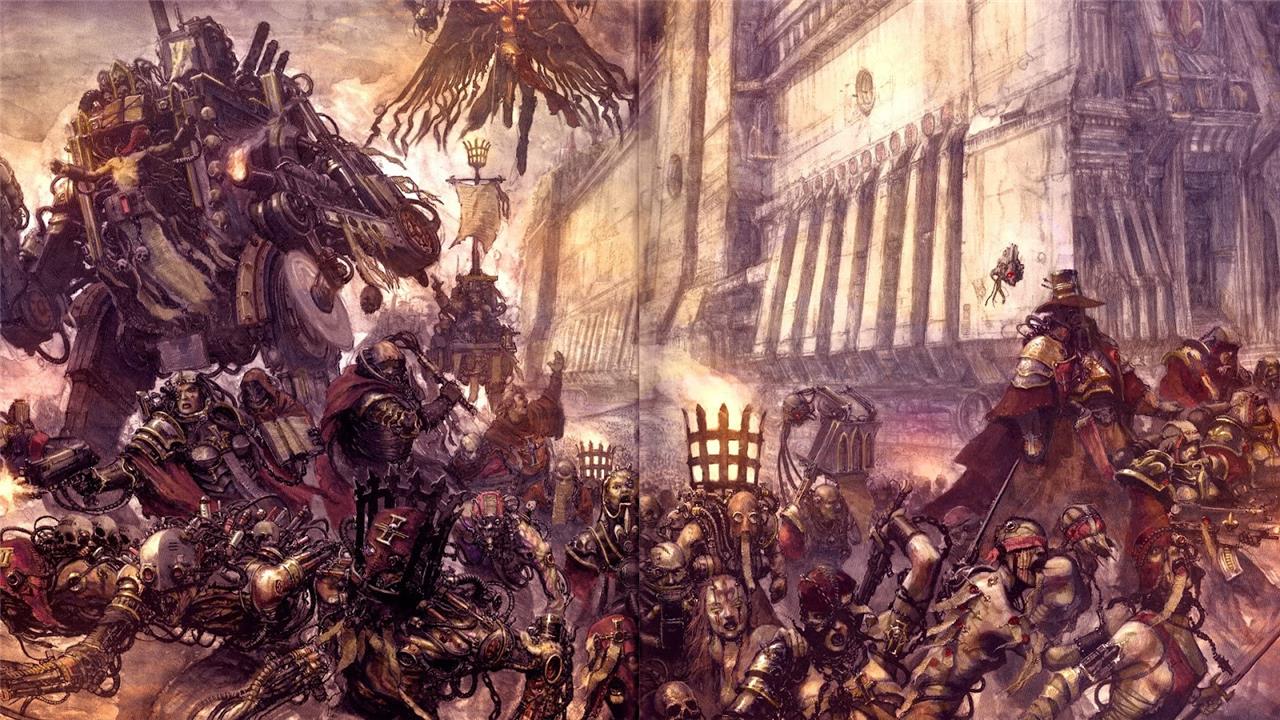
The Inquisition is a wonderful tool for any storyteller in Warhammer 40k. They show up outside everyone else’s jurisdiction and immediately start causing problems by pursuing some secret agenda or another. They investigate all manner of corruption and make everybody nervous in the process.
In Total War, they represent an opportunity to bring in the various oddities of the Imperium, the random units that just don’t make sense in other armies but absolutely deserve a place in the game. Everything from the Grey Knights, psychic Space Marines that specialise in fighting daemons, to the Arbites, whole groups of Judge Dredd-style paramilitary law enforcers.
Which factions are most likely for future DLC in TW Warhammer 40k
There’s no official DLC list yet, but looking at what’s in at launch (Space Marines, Aeldari, Astra Militarum, Orks) and how CA handles DLC in fantasy Warhammer, a few factions are almost guaranteed “headliners,” and some are strong second-wave candidates.
Below I’ll group them into tiers of likelihood and explain why they’re so probable.
Near-certain “headline” DLC races
These are the factions that are big 40k pillars, have full tabletop ranges, and are popular enough that CA almost certainly wants to sell them as full race packs.
-
Chaos Space Marines
-
Huge villain flagship with tons of sub-faction flavor (Black Legion, World Eaters, Emperor’s Children, etc.) and a very clear mechanical identity (elite, spiky Marines, daemons, corruption, raiding).
-
They parallel Warriors of Chaos in fantasy: too important to be missing, and perfect to build several lord packs around.
-
-
Tyranids
-
One of the most iconic xenos, with a complete model range and decades of lore.
-
Their “biomass swarm” gameplay (endless hordes, planetary consumption, synapse control) is distinctive enough to justify bespoke campaign mechanics and headline marketing.
-
-
Necrons
-
Another core xenos brand with a full range and a strong aesthetic hook (undead robots, tomb worlds, awakening protocols).
-
On the strategy side, they lend themselves to turtle, techno-necromancy, and awakening-style campaign mechanics.
-
-
T’au Empire
-
Highly recognizable and marketable: mechs, battlesuits, high-tech shooting, “Greater Good” diplomacy angle.
-
They fill the “shooty, mobility, diplomacy/alliances” niche quite differently from the Imperium and fit perfectly as a later DLC race that changes how you approach battles.
-
Very likely Imperial DLC
These sit inside the wider Imperium umbrella but are big enough to be races or substantial sub-faction packs.
-
Adeptus Mechanicus
-
Distinct roster (Skitarii, Kataphrons, Onagers, Knights allies), strong visual identity, and obvious campaign gimmicks (forge worlds, research trees, resource worship).
-
In fantasy terms, they’d be the “tech + weird resource economy” race pack.
-
-
Adepta Sororitas (Sisters of Battle)
-
Full plastic range now, strong fanbase, clear battlefield role (power-armour infantry backed by tanks and faith-based buffs).
-
Mechanically they fit as a more infantry-centric, flame-heavy, zealot counterpart to Marines.
-
-
Grey Knights (as a focused sub-faction or mini-race)
-
Smaller model line but extremely popular and thematically perfect as a “daemon-hunter elite” DLC.
-
Could come bundled in a Chaos-focused DLC, mirroring how CA has often paired Order vs. Destruction in fantasy lord packs.
-
Likely early Chaos/Xenos expansions
These could be full races or major add-on packs tied to the core ones.
-
Chaos Daemons
-
You can split by god (Khorne, Tzeentch, Nurgle, Slaanesh) or do a combined Daemons of Chaos-style roster.
-
This faction is great for “invasion” or rift-based campaign mechanics, very much in CA’s comfort zone after WH3.
-
-
Drukhari (Dark Eldar)
-
Major missing Aeldari branch if launch is just Craftworlds.
-
They bring raiding, slavery, gladiator arenas, and fast glass-cannon play; perfect for a “hard mode” xenos DLC.
-
-
Genestealer Cults (as a hybrid faction)
-
Could be a bridge between Guard and Tyranids, with rebellion, infiltration and uprising mechanics on campaign maps.
-
Their existence gives CA a neat asymmetric campaign hook: infect worlds, topple governors, then trigger full Tyranid invasions.
-
Strong but “second-wave” candidates
These feel more like later-cycle additions, once the core pillars are in.
-
Leagues of Votann
-
Newer tabletop range but already quite popular and visually distinct (space dwarfs, heavy armour, beams).
-
They could fill the “durable, elite, short-range firepower” niche similar to fantasy Dwarfs but with a sci-fi twist.
-
-
Custodes
-
Tiny model range, but huge fan appeal and very elite focus.
-
More likely as a sub-faction or premium lord pack tied to an Imperial story expansion than a full, early race.
-
-
World Eaters / Death Guard / Thousand Sons as separate Chaos sub-factions
-
Depending on how CSM are implemented, the god-specific Legions could become either:
-
distinct “micro-races” with tweaked rosters and campaign mechanics, or
-
deep DLC packs adding new lords, tech trees, and god-specific units to the main Chaos race.
-
-
How I’d expect the DLC cadence to look
This is speculative, but consistent with how CA handled fantasy Warhammer:
-
First big race DLC: one of Tyranids, Necrons, or Chaos Space Marines as a major tentpole.
-
Early Imperial-leaning DLC: Adeptus Mechanicus or Sisters of Battle, paired against a Chaos/xenos antagonist in the same pack.
-
Mid-cycle: T’au as a “meta-shifting” race with strong ranged play and diplomacy mechanics.
-
Ongoing: Chaos god-specific and Imperial specialist sub-faction packs (Grey Knights, Custodes, World Eaters, Drukhari, etc.) fleshing out the main four races.
If you tell me which playstyle you enjoy most in fantasy TW (e.g., Skaven cheese, Dawi turtle, Vampire Counts summoning), I can narrow this down to the 2-3 future 40k factions you’re most likely to love.
Why are Grey Knights a strong candidate for next DLC
Grey Knights are a strong candidate because they tick almost every box CA likes for a focused, “elite” DLC faction in a Warhammer game.
1. Extremely clear niche and fantasy
-
They are the Imperium’s dedicated daemon-hunters, created specifically to fight Chaos in ways normal Space Marines cannot, which makes them perfect foils for any Chaos-heavy campaign or DLC arc.
-
Every Grey Knight is a psyker and an Astartes, so their identity is instantly legible in gameplay terms: small model count, very tough, strong melee and shooting, plus potent psychic and teleportation tricks.
2. Great mechanical hooks for a TW campaign
-
Lore-wise they specialize in teleport assaults, coordinated psychic warfare, and “appearing where daemons need slaying,” which naturally translates into campaign mechanics like deep-strike deployments, anti-Warp bonuses, and crisis response systems.
-
Their equipment (Nemesis force weapons, Terminator armour, Aegis-warded wargear) gives designers a built-in excuse for unique unit abilities and high-impact elite troops rather than another mass-infantry faction.
3. Strong contrast but synergy with existing Imperium content
-
They are still part of the Imperium, but operate above normal chains of command as the Ordo Malleus’ hammer, which lets CA plug them into existing Imperial maps, politics, and crises without rewriting the setting.
-
In tabletop and lore, they routinely fight alongside (and then “clean up”) Guard and other Imperial forces, giving a clear narrative hook for a DLC that adds Grey Knights plus supporting Imperial agents or daemon-hunting mechanics.
4. High fan interest and “heroic moments”
-
Players who choose Grey Knights often cite them feeling like they can overcome “insurmountable odds,” with teleport plays and all-rounder toolkits that reward skillful micro and creative tactics.
-
That kind of high-risk, high-reward elite gameplay tends to sell well as DLC: a compact roster with lots of personality, great for cinematic battles and streamer-friendly “small army vs the world” campaigns.
5. Market and model considerations
-
On the tabletop side they’re an established, long-running sub-brand with their own codex, and commentators already expect GW to spotlight them again with a refresh and big character focus, which usually coincides with cross-media interest.
-
Because they are relatively small and specialized, they’re ideal for a mid-cycle DLC: cheaper to scope than a full new xenos race like Tyranids, but distinct enough to headline a “daemon war” expansion and sell on name recognition alone.
Put simply: Grey Knights offer a compact, lore-justified, high-fantasy elite army tailor-made for a Chaos-centric story DLC, which is exactly the sort of package CA historically likes to drop once the core races are in place.
